
DELLI

AIB2B SaaSLead Product DesignerJan → Feb ’26

Every Order Handled, However It Arrives

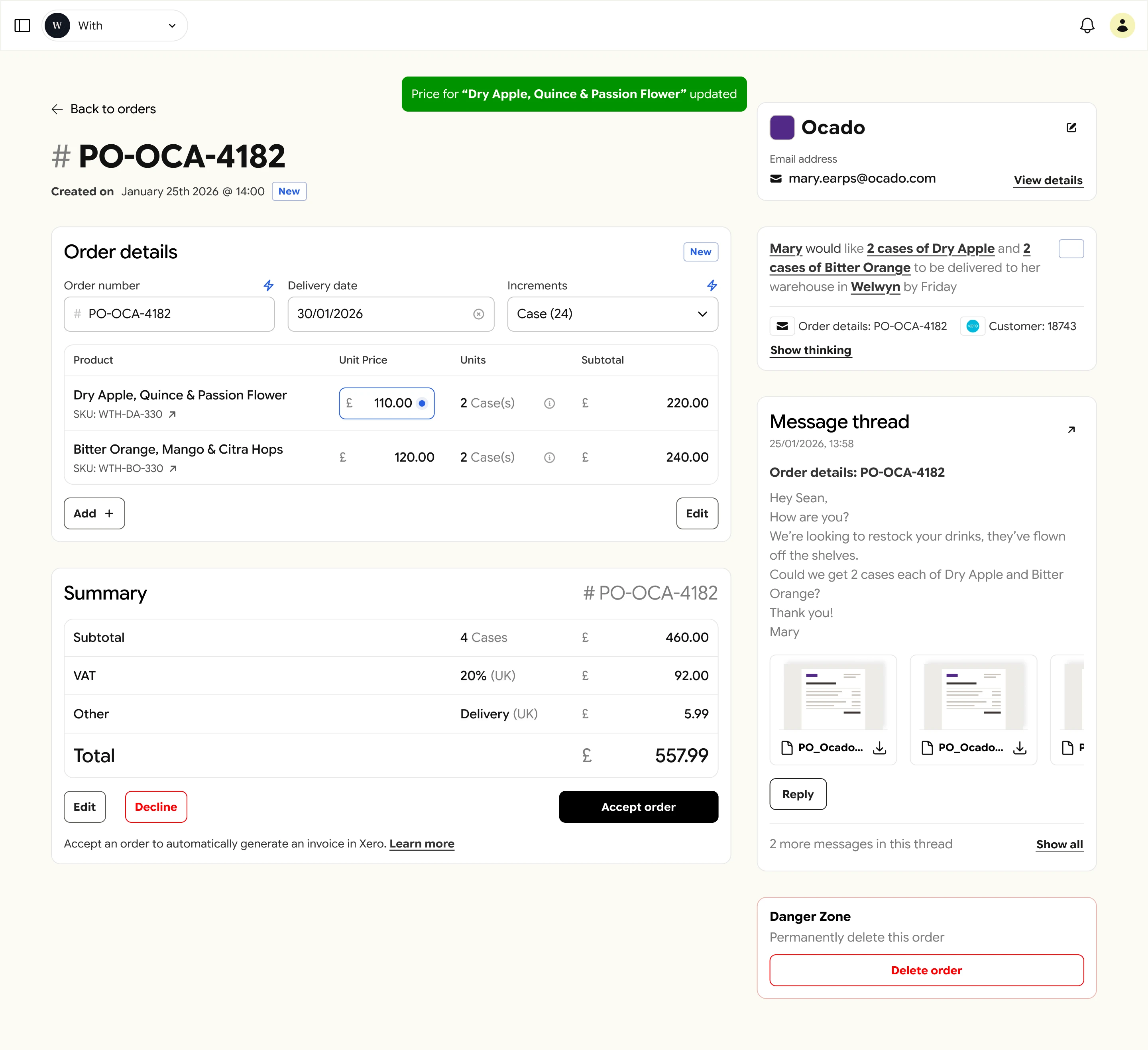
I joined DELLI in January 2026 as contract cover for its Lead Product Designer, while it was turning a marketplace for independent food makers into software for the makers themselves. Its Order Hub, where makers manage their orders, had been built to read the PDF orders they get by email. My part was helping it take on every other kind of order too, and giving it a component library it could grow on.

Skills

  • Product Design
  • AI Product
  • Design Systems
  • Code

Orders, However They Arrive

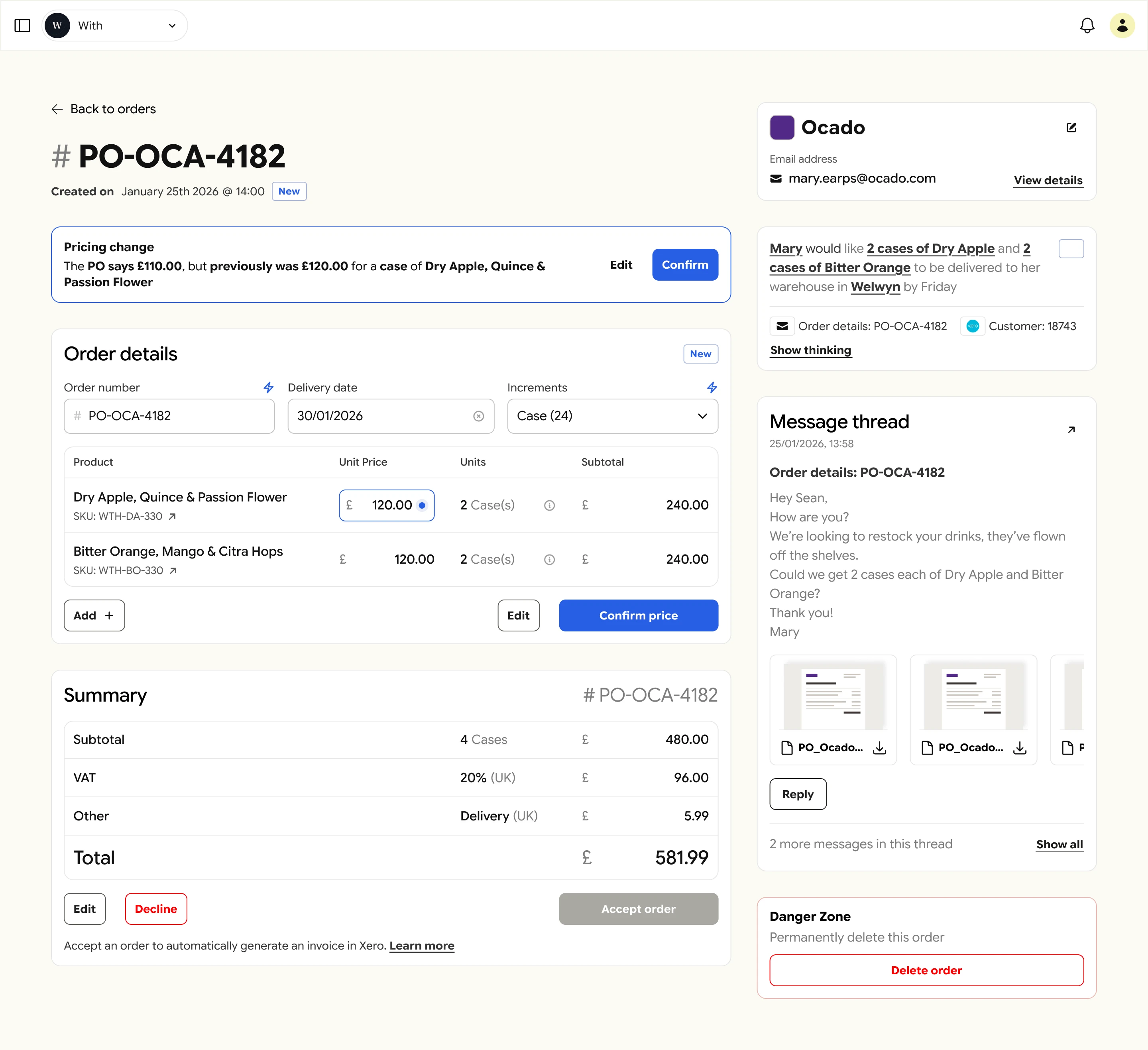
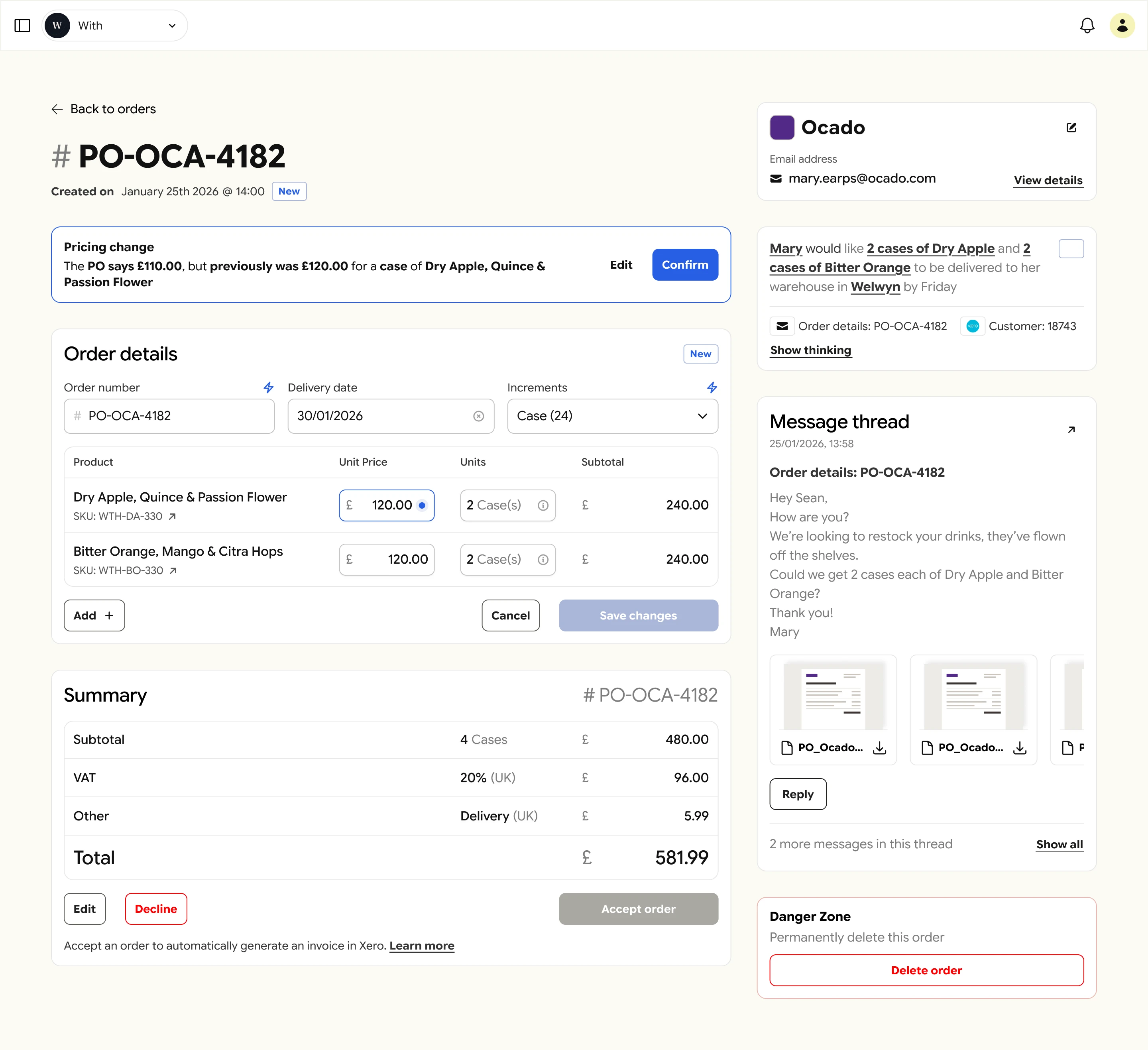
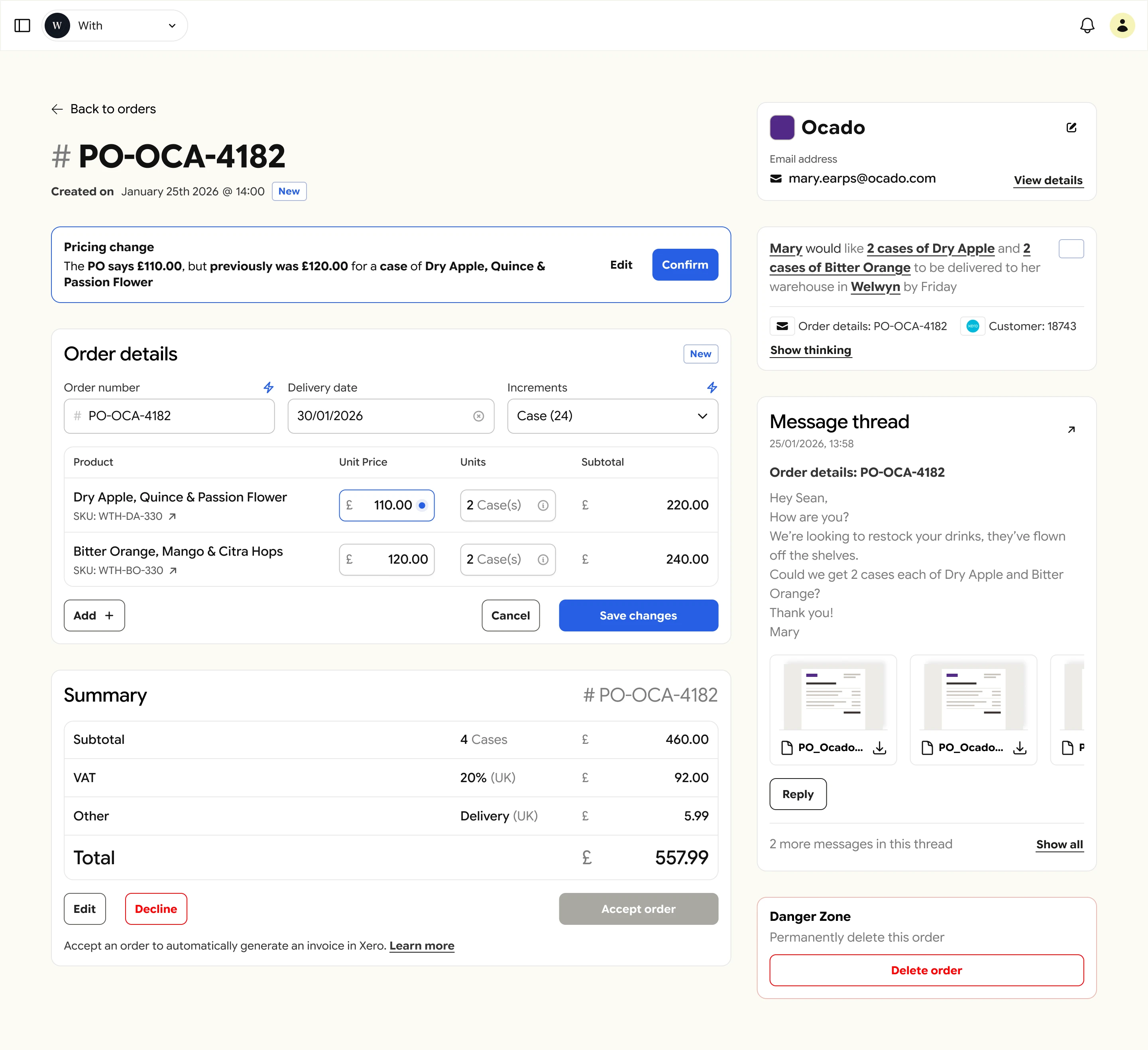
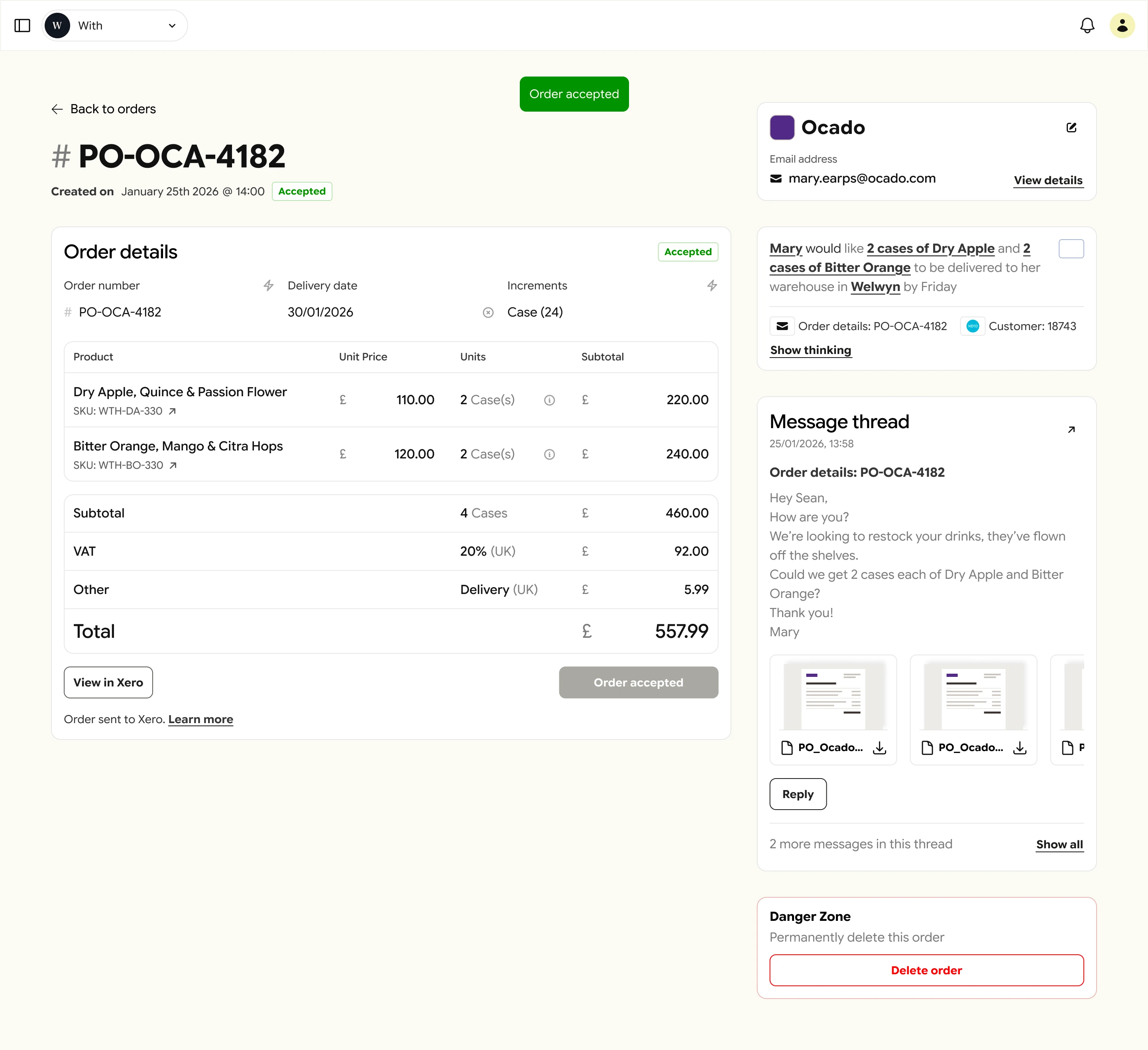
Reading PDFs from email was the right place to start: it’s how a lot of wholesale orders arrive. But makers also take orders by hand, online through Shopify (or other stores), over socials and even in store, and the next step was bringing those in too.

I mapped out what every order has in common (who it’s for, what’s in it, the price band, how many to a case), so an email became one way to process and track orders among several.

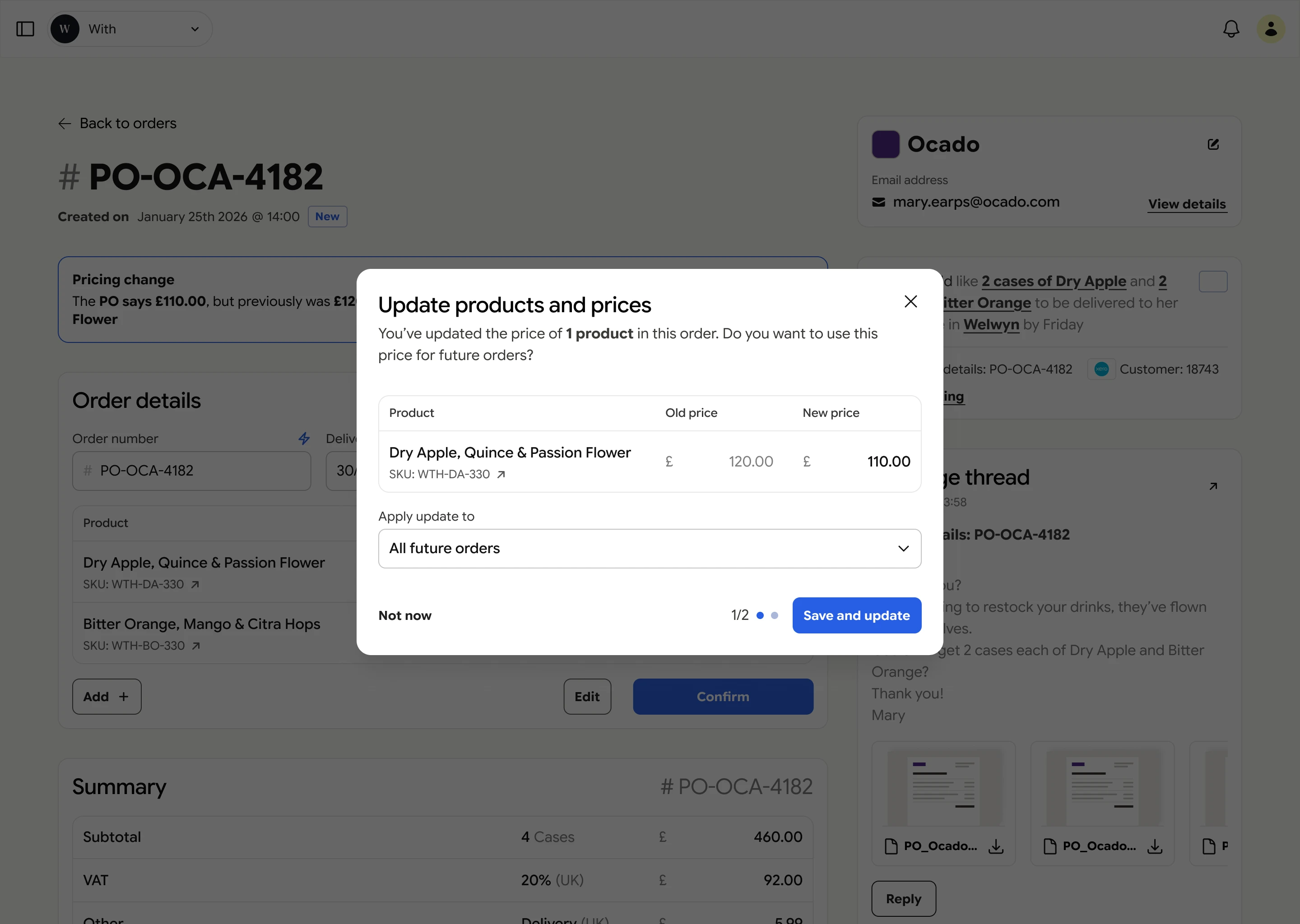
Some orders are clear and some aren’t. When the Order Hub isn’t sure, it asks: the email says “10x Orange”, so is that Bitter Orange, Mango & Citra Hops? The plan was for each answer to become a rule, so the same question doesn’t come up twice. When a PO’s price doesn’t match the last order, the maker can apply the new one to that shop or to every customer.

A Library to Grow On

The new screens needed components the Order Hub didn’t have yet. The existing ones were MUI, styled a screen at a time, which got the team moving fast but meant more than 150 slightly different versions. With more screens on the way, I proposed moving to Base UI, shadcn/ui and Tailwind, with DELLI’s colours, spacing and type as tokens shared by Figma and code. It took under a week of groundwork before new screens could use it.

I built each component in code with help from Claude, working directly from its Figma spec. This is where my way of building components started: Claude learning from its own mistakes, reading the documentation before building, and checking earlier components for what we could reuse.

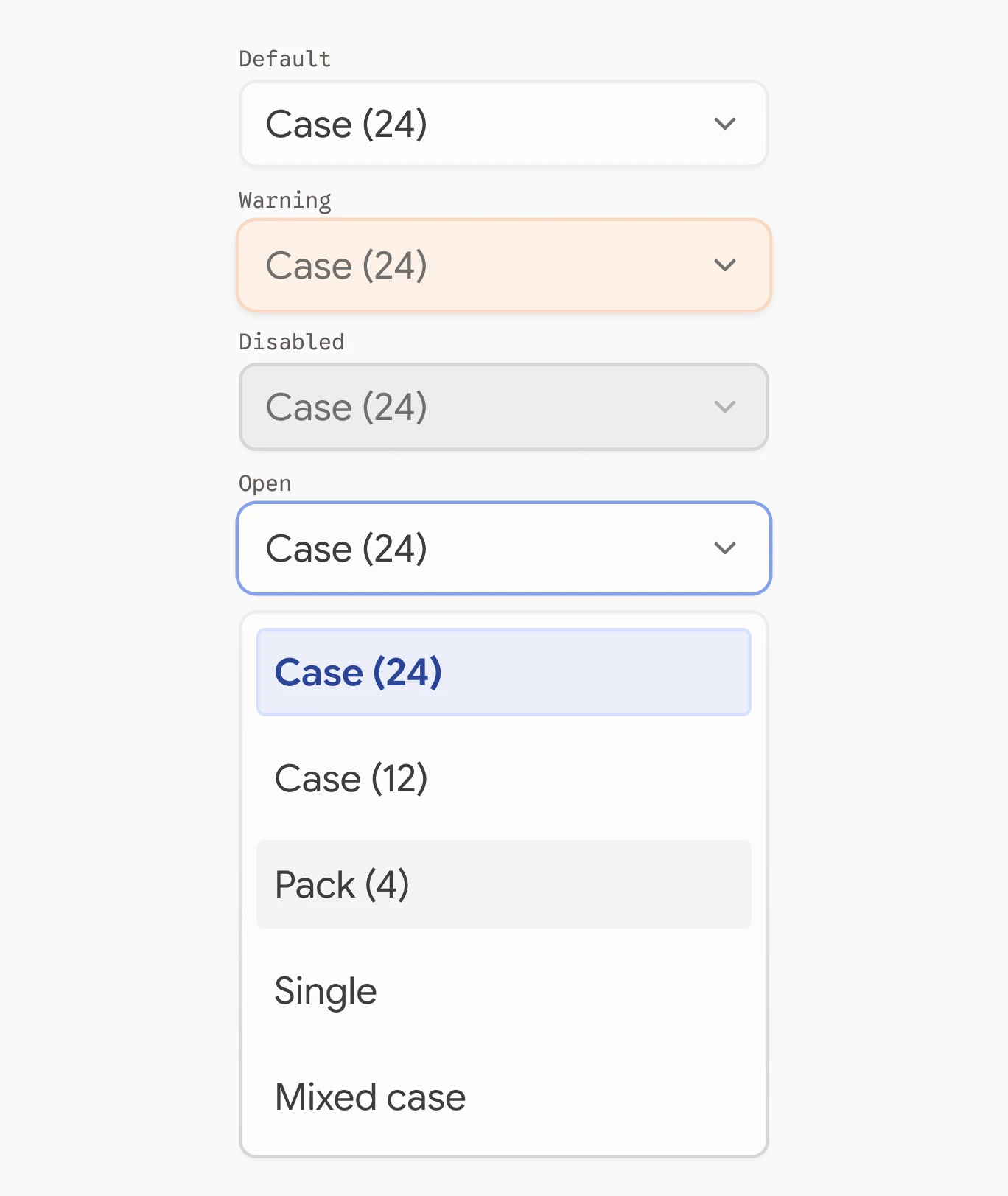
DELLI’s Select component set to Case (24), in four states: default, warning (an orange tint), disabled (greyed out) and open, its list showing Case (24) selected, then Case (12), Pack (4), Single and Mixed case
The Select, in four of its seven states

Select

4 rounds

Read firstBase UI’s docs for Select, the rules so far, and how Input was built

  1. 1The list opened over the field, not under itRead a primitive’s defaults before building
  2. 2The list was narrower than the fieldSize a popup from the field it opens from
  3. 3Disabled didn’t show the not-allowed cursorLet the browser handle disabled
  4. 4The last option’s border was clippedMeasure a scrolling list exactly, then round up

ReusedThe warning dot, from Input

Every rule is read before the next build. Seven components in, there were 28.

Moving Forward

I’ve kept that way of working since: Format’s design system started from the same kind of build log.